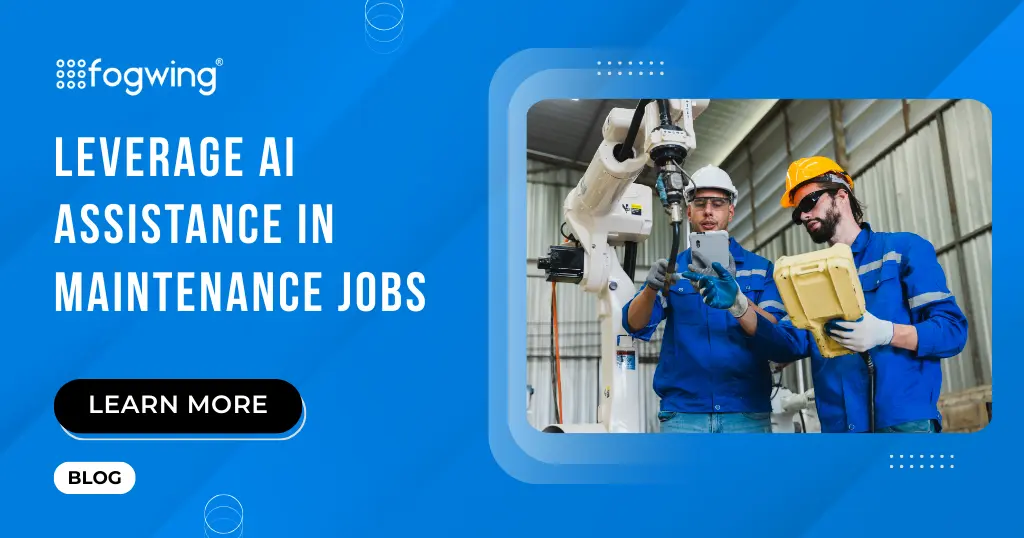
Global industrial SMEs are entering a decisive era of digital demands. Rising operational costs, skilled labor shortages, and growing compliance demands are forcing maintenance providers to rethink how maintenance is planned, executed, and optimized.
Traditional maintenance management practices such as white boarding, paper-based job cards, manual logs, reactive repairs, and siloed data are no longer sufficient.
Digital software are helping to some level, but new AI in maintenance is rapidly becoming a strategic differentiator.
Artificial Intelligence is no longer an experimental add-on. AI can be directly embedded into day-to-day maintenance workflows, enabling technicians, supervisors, and reliability leaders to work smarter, faster, and with greater accuracy.
This article examines how the maintenance team can utilize AI assistance in maintenance tasks, with real-world applications across various industries, including food processing, automotive manufacturers, energy producers, utilities, electronics component manufacturers, and facility maintenance.
The Maintenance Challenge
Manufacturers across India, Southeast Asia, Japan, and the Middle East share a common set of maintenance management challenges:
- Shortage of highly skilled maintenance technicians who understand the equipment
- High dependency on manual data entry and paper-based logs
- Inconsistent maintenance SOPs across plants and shifts
- Increasing unplanned downtime is impacting production targets.
- Limited visibility into asset health and failure patterns
- Pressure to reduce operational and maintenance costs
In many organizations, maintenance management teams spend more time documenting work than actually improving asset reliability. Manual data entry through the MIS team leads to data quality suffering, insights are delayed, and decision-making becomes reactive.
AI-powered CMMS platforms like Fogwing CMMS address these challenges by assisting humans, not replacing them, making maintenance simpler, more intuitive, and more effective.
The Evolution of CMMS: From Digitization to Intelligence
Many legacy CMMS systems do not go beyond digitization by just creating digital work orders, asset registers, and schedules. Fogwing CMMS goes beyond digitization into intelligent assistance.
Fogwing CMMS uses advanced AI to help the maintenance team in a more practical way:
- Understand natural language and voice commands.
- Extract data from images and unstructured inputs.
- Generate insights, summaries, and recommendations.
- Learn from historical maintenance patterns.
The result is a Fogwing CMMS that actively supports maintenance decisions rather than passively storing data.
This shift from intelligent systems to real-world support is best understood through AI assistance in maintenance, where intelligence is applied directly to everyday maintenance activities.
AI in Maintenance
AI assistance in maintenance focuses on augmenting technicians and maintenance teams with intelligent, real-time support across daily tasks. From planning and execution to documentation and root cause analysis, AI helps reduce manual effort, improve accuracy, and enable faster, more consistent maintenance decisions across industrial environments.
Fogwing AI Copilot: A Virtual Maintenance Assistant
One of the most powerful innovations in Fogwing CMMS is the Fogwing AI Copilot. The world’s first conversational AI designed specifically for maintenance teams.
Fogwing AI Copilot allows technicians and engineers to interact with the maintenance copilot using voice or text, just like talking to a colleague.
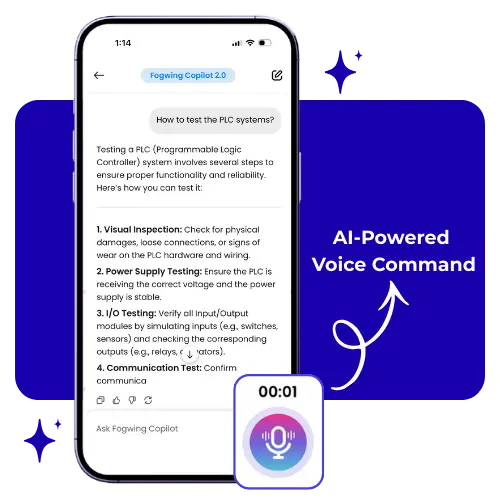
Maintenance teams can ask questions such as:
- “What maintenance is due for this asset today?”
- “Show me the last breakdown history of this machine.”
- “Which spare parts are available for this work order?”
- “What SOP should I follow for this equipment?”
The usage of AI in Maintenance Management instantly retrieves accurate, contextual answers from Fogwing CMMS, eliminating the need to navigate multiple screens or reports.
In large Indian and Southeast Asian plants where technicians manage hundreds of assets per shift, AI Copilot significantly reduces time spent searching for information. This is especially valuable for multi-language, multi-skill teams, where quick guidance improves execution consistency.
AI-Powered OCR for Asset Metering:
Asset metering is a critical process to capture the assets’ health meters, such as temperature, running time, clock, pressure, and even production quantities, to determine the usage trends for preventive and predictive maintenance.
However, this manual metering leads to human errors such as inaccurate entries and false alarms.
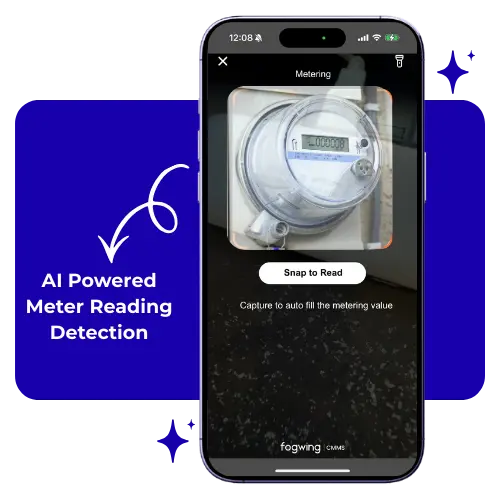
Fogwing CMMS uses AI-powered Optical Character Recognition (OCR) to automate meter reading capture by snapping a picture and capturing metering value automatically.
How It Works
- Technicians capture a photo of the meter readings using the Fogwing CMMS mobile app.
- AI extracts numeric values from the image using OCR technology.
- Meter readings are automatically recorded against the asset.
Benefits for the Maintenance Team
- Eliminates manual data entry errors
- Improves data reliability for condition-based maintenance
- Enables accurate runtime and consumption tracking
Industry Use Case
In energy plants, utilities, and process industries across Asia, AI-powered OCR ensures precise tracking of power consumption, flow meters, and runtime meters, directly supporting energy efficiency and compliance initiatives.
AI Voice Dictation: Let Technicians Speak, Not Type
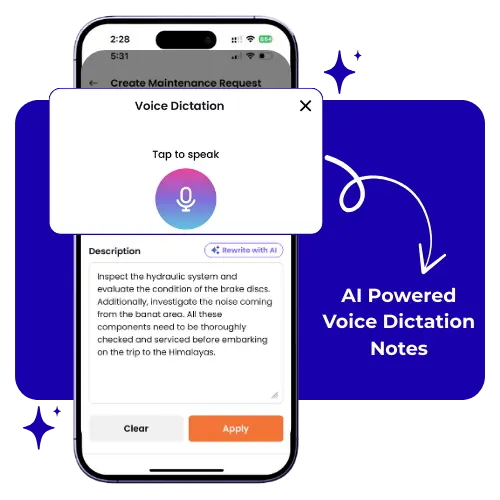
Mobile keyboards are not designed for industrial environments. Gloves, grease, noise, and time pressure make typing maintenance notes difficult.
Fogwing’s AI Voice Dictation feature allows technicians to:
- Speak naturally during or after a job.
- Convert speech into structured maintenance notes.
- Save detailed observations directly into work orders.
Benefits for the Maintenance Team
Voice-driven documentation ensures:
- More detailed job records
- Better knowledge capture from experienced technicians
- Higher adoption of CMMS among shop-floor teams
Industry Use Case
In automotive and electronics plants with high-speed production lines, voice dictation helps technicians capture critical failure symptoms instantly, before the next breakdown occurs.
AI-Powered Rewrite: Standardizing Maintenance Communication
Maintenance documentation often varies in quality depending on who writes it. Poor grammar, unclear descriptions, or mixed languages reduce the value of maintenance data and also lead to inaccurate compliance reporting and findings.
Fogwing’s AI-powered rewrite capability:
- Corrects grammar and language issues
- Improves clarity and professionalism
- Standardizes maintenance notes across teams and locations
Benefits for the Maintenance Team
AI-powered language support helps ensure:
- More accurate work notes in proper language
- Accurate compliance reports and work documentation
- Building a knowledge repository to train and enhance the workforce
This is particularly important for Asia-based manufacturers operating global plants, where maintenance records must meet audit, compliance, and corporate reporting standards.
AI-Powered Work Order Summary Generation
Maintenance managers and plant leaders need consolidated data in a readable format, not a bunch of raw maintenance data. However, preparing a readable format of data manually using any editing tool is time-consuming as well as error-prone. The Generative AI and large language model help to reduce the manual summary data creation with language support. Fogwing automatically generates work order summaries using Generative AI, highlighting:
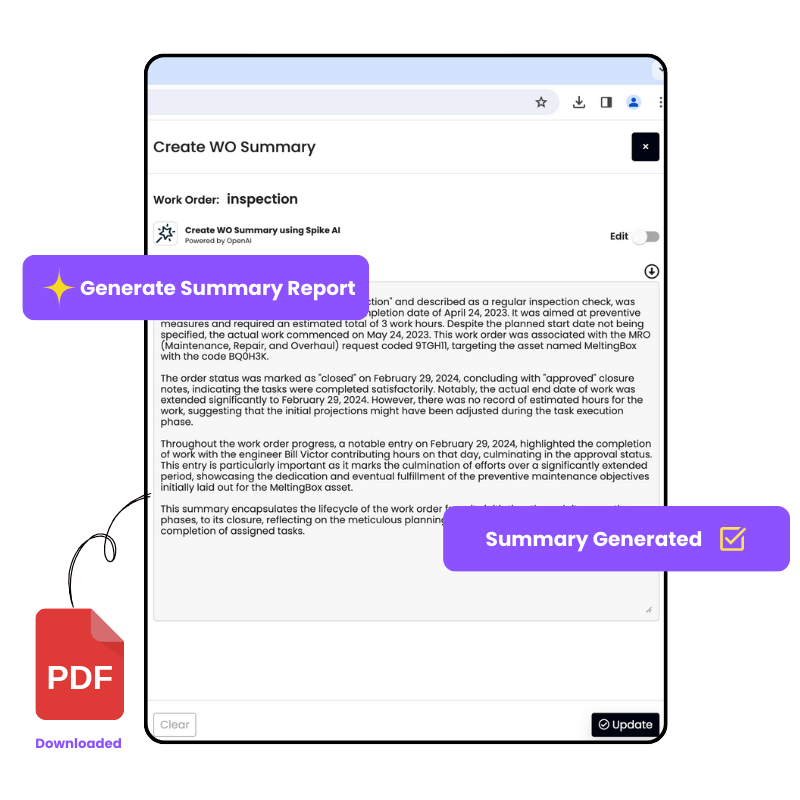
- Work performed
- Issues identified
- Maintenance procedure followed
- Actions taken and recommendations
Benefits for the Maintenance Team
- Faster approvals and reviews
- Simplified audits and reporting
- Improved communication between maintenance and operations
Industry Use Case
In food processing and FMCG plants across Asia, summarized work orders help leadership quickly assess compliance, hygiene-related maintenance, and recurring equipment issues.
AI-Powered SOP & Maintenance Checklist Generation
Traditional maintenance teams prepare a maintenance checklist or procedure, or task list, once and follow it for decades regardless of the machine conditions. Any periodic update of this checklist requires extreme knowledge and time to revalidate and educate the team. Executing SOPs manually is time-consuming and often inconsistent across plants.
Fogwing CMMS uses Industrial AI technologies to:
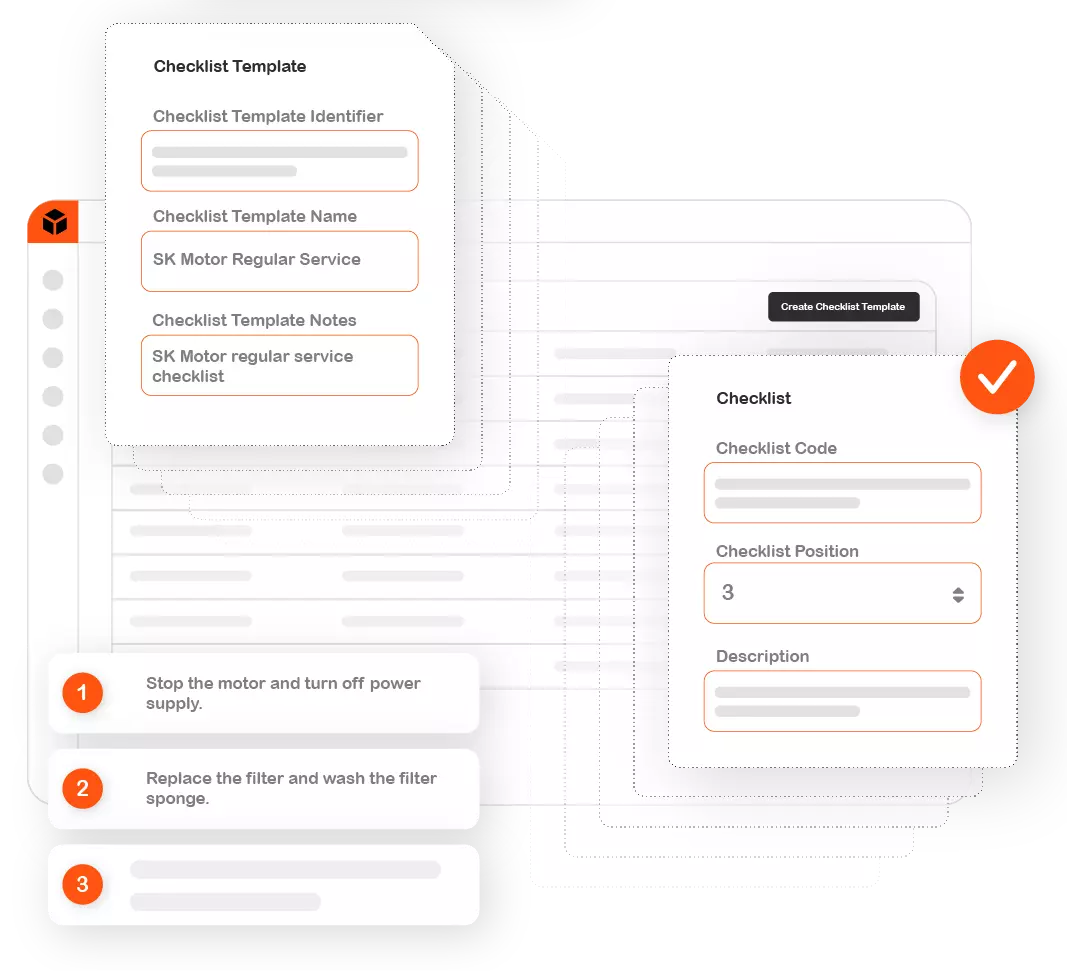
- Generate asset-specific maintenance checklists.
- Create SOPs based on asset type, usage, and history.
- Recommend best-practice steps for technicians.
Benefits for Maintenance Team
Standardized Maintenance SOPs:
- Improve safety
- Reduce human error
- Ensure maintenance quality across shifts and locations.
Industry Use Case
For manufacturers expanding across multiple Asian countries, AI-generated SOPs help maintain consistent maintenance standards even when onboarding new or contract technicians.
AI-Powered Root Cause Analysis for CAPA
Asset-heavy maintenance management operations demand high reliability and zero downtime. However, repeated failures are costly and lead to maintenance inefficiency. Traditionally, Root Cause Analysis (RCA) and Corrective and Preventive Action (CAPA) methodologies are used to identify the true root cause of asset failure and corrective action.
This approach requires expertise in data analysis, identifying patterns, and experience. Also documenting these analyses and actions required significant time and effort, which delays.
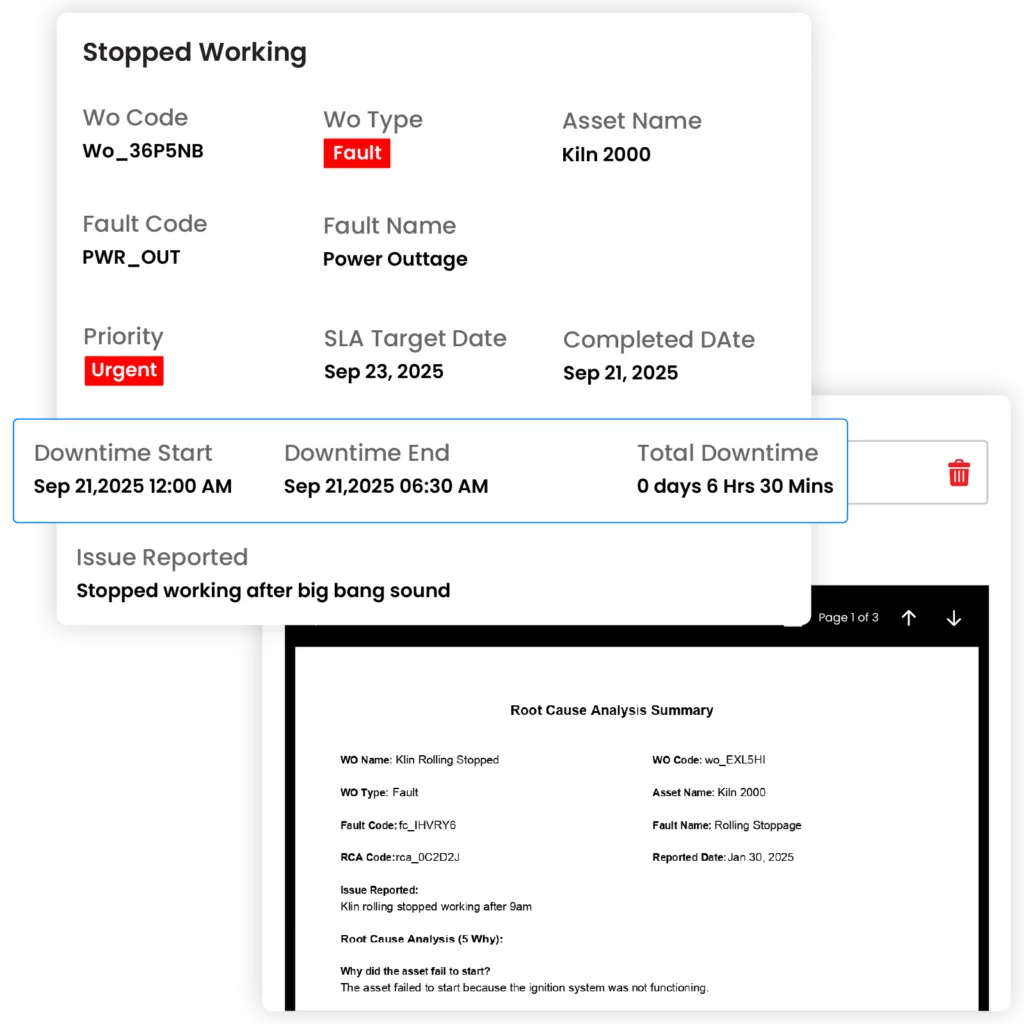
Fogwing’s AI-powered Root Cause Analysis (RCA) supports CAPA by:
- Analyzing historical failure and maintenance data
- Identifying probable root causes
- Suggesting corrective and preventive actions
Benefits for the Maintenance Team
By leveraging AI-driven RCA, maintenance teams can move from reactive to proactive operations:
- Prevent repeat failures
- Improve asset availability
- Extend equipment life
Industry Use Case
In heavy manufacturing and energy plants across Asia, AI-driven RCA supports reliability engineering initiatives and long-term asset health programs.
AI-Powered Autofill: Asset Data Management
The maintenance team needs more accurate information about asset specifications and history. Incomplete or inconsistent asset data limits the effectiveness of any maintenance operations. However, asset data entry in CMMS is time-consuming and requires constant updates.
Fogwing AI assists asset data management by:
- Auto-filling asset attributes
- Suggesting missing information
- Maintaining consistent asset hierarchies
This results in cleaner data, which directly improves planning accuracy, analytics, and predictive maintenance outcomes.
Why Fogwing Industrial AI Is Built for Maintenance Reliability
Fogwing’s Industrial AI capabilities are designed with practicality, an intelligent assistant for work operations, enhancing maintenance efficiency, improving product quality, and boosting overall efficiency through real-time insights and automation.
Fogwing Industrial AI offers AI Copilot, AI Vision, AI Audio, and AI-powered CMMS:
- Mobile-first for shop-floor technicians
- Simple, intuitive user experience
- Supports fast adoption across skill levels
- Scales across single plants and multi-location enterprises
- Optimized for cost-sensitive Asian manufacturers
Rather than overwhelming teams with complex analytics, Fogwing focuses on assistive intelligence, AI that works alongside humans.
Benefits of Fogwing AI-Assisted Maintenance
Manufacturers adopting AI-powered CMMS like Fogwing experience measurable benefits:
- Reduced unplanned downtime
- Higher maintenance productivity
- Improved data accuracy and compliance
- Faster decision-making
- Longer asset life and lower maintenance costs
AI assistance transforms maintenance from a cost center into a strategic reliability function.
Conclusion
AI is no longer optional for manufacturers aiming to stay competitive in Asia’s fast-evolving industrial landscape.
By leveraging AI assistance in maintenance management, Fogwing CMMS empowers maintenance teams to:
- Execute work with confidence.
- Capture accurate data effortlessly.
- Learn from every maintenance action.
- Build resilient, high-performing asset operations.
The future of maintenance is not about replacing technicians. It is about augmenting them with intelligence.
Fogwing CMMS delivers that future today.
FAQs
1. How does AI assistance improve daily maintenance operations?
AI Assistance in maintenance operations reduces manual work by automating tasks such as meter readings, work order documentation, SOP generation, and failure analysis. This allows maintenance teams to focus more on asset reliability rather than paperwork, improving productivity and consistency across shifts.
2. Is AI in maintenance management meant to replace technicians?
No. AI Assistance in maintenance is designed to augment technicians, not replace them. It acts as a virtual support system that provides insights, recommendations, and guidance while keeping human expertise at the centre of maintenance decision-making.
3. What are common use cases of AI in maintenance management?
Common use cases include AI-powered maintenance copilots, automated meter reading using OCR, voice-based maintenance documentation, work order summarisation, SOP and checklist generation, root cause analysis, and asset data autofill.
4. What is the future of AI in maintenance management?
The future of AI assistance in maintenance lies in deeper contextual intelligence, real-time decision support, and continuous learning from maintenance actions. AI will increasingly function as a trusted maintenance companion, improving reliability without increasing operational complexity.
5. Is AI-assisted maintenance management suitable for small and mid-sized manufacturers?
Yes. AI Assistance in maintenance operations is especially valuable for small and mid-sized manufacturers facing skilled labour shortages and cost pressures. Cloud-based, mobile-first AI-assisted CMMS platforms make advanced maintenance capabilities accessible without heavy IT investment.