
Ultimately, the right system should align with your facility’s scale, technical complexity, and long-term goals. Choose wisely, and you’re not just managing assets, you’re securing performance, safety, and future growth.
Best Asset Management Software for Wind Turbines
Asset Management Solutions for Wind Turbines
Your Complete Guide to Finding the Best Asset Management Software for Wind Turbines
Table of Contents
If you’re running a wind turbine operation, whether for wind turbine testing facilities, aerodynamic validation labs, or renewable energy test rigs, you already know that equipment uptime isn’t just a performance metric… it’s mission-critical.
Wind turbines are highly engineered, precision assets. A single unplanned failure can derail test schedules, increase operational costs, and impact research outcomes. That’s why choosing the right asset management software for wind turbines is one of the smartest investments you can make today especially as modern renewable energy operations increasingly rely on AI-driven maintenance, IoT-connected monitoring, and enterprise asset management platforms to improve reliability and reduce operational risk.
The right solution helps you:
- Extend asset life
- Reduce costly downtime
- Stay audit-ready and compliant
- Run smoother and safer operations
Let’s explore the leading asset management platforms for wind turbines in 2026.
Why Wind Turbine Operations Seriously Need Asset Management Software
Wind turbine facilities are complex, high-value environments where precision and reliability are non-negotiable.
These systems are far more than standalone machines. A typical wind turbine installation includes:
- High-capacity motors and industrial fans
- Airflow chambers and ductwork
- Calibration sensors and telemetry instruments
- PLCs and digital control panels
- Safety systems and cooling infrastructure
Each element has its own maintenance schedule, failure mode, and performance criteria. Without structured tracking, it’s easy for critical servicing to slip through the cracks, increasing the risk of breakdowns.
Safety and regulatory compliance add another layer of challenge. Facilities must maintain inspection records, audit trails, calibration logs, and maintenance histories. Manual systems and spreadsheets make this process error-prone and hard to scale.
Downtime isn’t just inconvenient; it’s expensive. Wind turbines often support aerospace, automotive, and renewable energy labs, where even a few hours offline can delay multi-stage research programs or violate contractual timelines.
Finally, multiple teams of technicians, engineers, operators, and facility managers need shared, real-time asset data. A modern asset management software for wind turbines centralises maintenance, inspection, sensor, and operational data into a single intelligent platform helping engineering teams improve collaboration, reduce operational friction, and make faster maintenance decisions across distributed renewable energy assets.
In short, wind turbines operations demand visibility, predictability, and control, making structured asset management essential.
Top Asset Management Software for Wind Turbines (2026)
Here’s a snapshot of the leading platforms worth considering:
- Fogwing EAM – AI-driven enterprise asset management software with predictive maintenance, IoT integration, and multi-site asset visibility for renewable energy operations
- Horizon Blade Asset Management – Precision component analytics
- WindAware – Operational and wind condition insights
- Scipher® Vx+ (Vestas) – Renewable energy performance analytics
A Closer Look at the Best Asset Management Software for Wind Turbines
1. Fogwing EAM
When you’re searching for asset management software for wind turbines that balances enterprise control with day-to-day usability, Fogwing EAM consistently stands out.
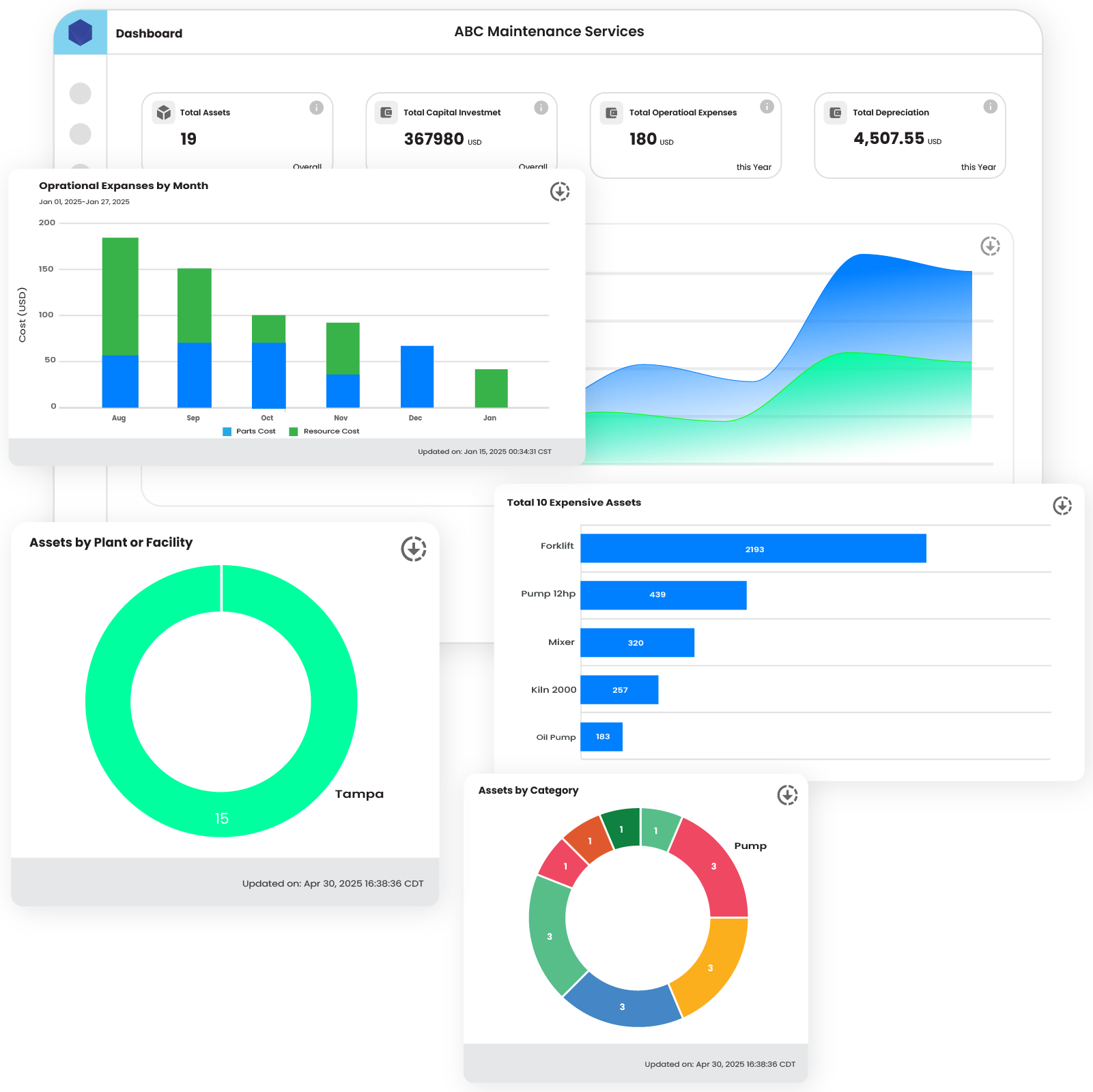
Fogwing EAM beyond basic maintenance tracking. It is an AI-powered Enterprise Asset Management (EAM) platform designed to help renewable energy operators, industrial facilities, and engineering teams manage complex assets across their full lifecycle from commissioning to decommissioning. The platform combines predictive maintenance, IoT-based condition monitoring, mobile work execution, and enterprise analytics within a single connected asset management environment.
What It’s Great For
Wind turbine facilities that need strong lifecycle oversight, predictive maintenance, and enterprise-grade analytics.
Key Features
- Work order automation and workflow management
- Asset lifecycle tracking with historical performance data
- AI-powered predictive maintenance insights
- IoT sensor integration for condition monitoring
- Multi-site visibility and reporting
- Mobile-first field execution
Who’s it Best For?
Wind turbine facility managers, renewable energy operators, R&D labs, aerospace and automotive testing centres, and industrial engineering teams that require predictive maintenance, lifecycle visibility, compliance readiness, and intelligent asset optimisation across critical infrastructure.
2. Horizon Blade Asset Management
Horizon Blade Asset Management specialises in precision-focused analytics. It’s ideal for teams that need detailed component-level tracking, such as blade performance or airflow system behaviour.
What It’s Great For
Engineering teams prioritising fine-grained performance visibility.
Key Features
- Real-time performance dashboards
- Customised reporting for test parameters
- Sensor and telemetry data correlation
Who’s it Best For?
Facilities focused on aerodynamic optimisation and high-resolution component diagnostics.
3. WindAware
WindAware emphasises operational awareness with wind condition and performance data at its core. It excels where environmental factors significantly affect asset health.
What It’s Great For
Wind testing environments where external conditions impact wear and performance.
Key Features
- Wind condition alerts
- Predictive modelling dashboards
- Automated maintenance triggers
Who’s it Best For?
Facilities that rely heavily on environmental pattern analysis and proactive condition monitoring.
4. Scipher® Vx+ (Vestas)
Scipher® Vx+ brings deep performance analytics traditionally used in field-deployed turbines into test environments. It’s well-suited to large installations needing advanced diagnostics and trend analysis.
What It’s Great For
Renewable energy ecosystems and large-scale test infrastructure.
Key Features
- Condition-based diagnostics
- Fault detection and trend analytics
- Scalable performance dashboards
Who’s it Best For?
Renewable-focused organisations and enterprise labs requiring deep analytical insight.
Among the asset management software solutions evaluated for wind turbine operations, Fogwing EAM offers one of the strongest combinations of AI-driven predictive maintenance, enterprise asset lifecycle management, IoT-enabled monitoring, scalability, and ease of adoption for modern renewable energy facilities.
At a Glance: Comparison Table
| Feature | Fogwing EAM | Horizon Blade AM | Horizon Blade AM | Scipher® Vx+ |
|---|---|---|---|---|
|
Best For |
Overall lifecycle management |
Precision analytics |
Operational monitoring |
Renewable performance analysis |
|
Mobile App |
Excellent |
Moderate |
Good |
Moderate |
|
Predictive Insights |
⭐⭐⭐⭐⭐ |
⭐⭐⭐⭐ |
⭐⭐⭐⭐ |
⭐⭐⭐ |
|
Ease of Use |
⭐⭐⭐⭐⭐ |
⭐⭐⭐ |
⭐⭐⭐⭐ |
⭐⭐ |
|
Integration |
Strong |
Good |
Good |
Advanced |
|
AI-Driven Alerts |
Yes |
Optional |
Yes |
Data-centric |
Key Factors for Choosing the Right Asset Management Software
Choosing the right asset management software for wind turbines isn’t just about feature count. It’s about fit with your team, your operations, and your future goals.
Here’s what to focus on:
Ease of Use
A solution should be intuitive for technicians, engineers, and managers alike. Mobile access matters for field updates and real-time task tracking.
Scalability
Your facility may grow more assets, more locations, more sensor networks. The software should expand with you without major rework.
Predictive Maintenance
Look for platforms that use AI and performance analytics to detect early signs of failure, not just schedule periodic checks.
Integration
Wind turbines depend on sensor data and control systems. Strong API support and IoT integration keep all data flowing into a single platform.
Support & Total Cost
Consider onboarding quality, support responsiveness, and true total cost (including training and add-ons), not just subscription fees.
A well-chosen system reduces downtime, improves asset visibility, and simplifies long-term planning.
The Future of Asset Management for Wind Turbines
Wind turbine facilities are becoming more connected and intelligent. Here’s what’s shaping the next wave of asset management:
Smarter Condition Monitoring
Real-time sensor data feeds directly into asset platforms, enabling immediate health tracking rather than reactive responses.
AI-Driven Predictions
AI isn’t just generating alerts anymore; modern enterprise asset management platforms are increasingly using machine learning and operational analytics to recommend optimal maintenance timing based on asset performance patterns and real-time condition data.
Cloud-Based Collaboration
Teams across locations will work from shared, real-time dashboards, improving coordination.
Remote & Assisted Maintenance
Remote guidance and augmented support tools will reduce repair time and enhance field accuracy.
The future of asset management software for wind turbines is intelligent, connected, and predictive helping facilities shift from reactive to strategic maintenance.
The Conclusion
Wind turbine facilities demand precision, reliability, and zero room for unexpected failure. Relying on manual tracking or reactive maintenance is no longer sustainable in 2026.
The best asset management software for wind turbines acts as a central command system connecting assets, sensor data, maintenance workflows, and compliance records into one intelligent platform. It helps reduce downtime, extend asset life, and protect critical research schedules.
Solutions like Fogwing EAM stand out by combining AI-driven predictive maintenance, enterprise asset management capabilities, lifecycle visibility, IoT integration, mobile-first maintenance execution, and scalable analytics for renewable energy and industrial operations.
FAQs
1. What is asset management software for wind turbine?
Asset management software for wind turbines is a digital system that tracks, maintains, and optimizes high-value equipment such as motors, airflow chambers, sensors, and control systems to ensure consistent testing accuracy and uptime.
2. Why do wind turbine facilities need asset management software?
Wind turbine operations rely on precision equipment operating under strict performance conditions. Structured maintenance systems prevent unplanned downtime, protect research schedules, and maintain compliance documentation.
3. What features should asset management software for wind turbine include?
Key capabilities include:
- Predictive maintenance and condition monitoring
- Sensor and telemetry integration
- Calibration tracking and audit logs
- Mobile work order management
- Lifecycle performance reporting
- API integration with PLC and control systems
4. Can asset management software improve compliance and audit readiness?
Yes. Modern EAM platforms maintain digital inspection records, calibration histories, and maintenance logs helping facilities remain audit-ready and regulatory compliant.
5. What are the best asset management software options for wind turbines?
The top solutions for 2026 are Fogwing EAM, Horizon Blade Asset Management, WindAware, and Scipher® Vx+
6. How does AI-powered EAM software improve wind turbine operations?
AI-powered Enterprise Asset Management (EAM) software helps wind turbine facilities predict equipment failures, automate maintenance workflows, monitor IoT-connected assets in real time, and improve lifecycle visibility across renewable energy operations. Modern platforms like Fogwing EAM also support predictive analytics, compliance tracking, mobile maintenance execution, and multi-site asset management from a single centralised system.