
Best Asset Management Software for Heavy Equipment Manufacturing in 2026
How to Choose the Right Asset Management Software for Heavy Equipment Manufacturing
The Selection Guide – Asset Management Software for Heavy Equipment Manufacturers
Table of Contents
Asset management software for heavy equipment manufacturing has quietly become one of the most critical systems inside modern factories. Not because it’s trendy, but because heavy equipment manufacturers simply cannot afford asset failure, poor visibility, or reactive maintenance anymore.
Whether you’re manufacturing construction machinery, mining equipment, agricultural machines, cranes, or large industrial vehicles, your business runs on high-value assets. These machines are expensive, complex, and expected to perform reliably for years under extreme conditions.
And yet, many manufacturers are still managing assets through spreadsheets, siloed systems, or manual logs that fall apart as soon as production pressure rises.
This guide breaks down how asset management really works in heavy equipment manufacturing today, why traditional approaches fail, and how to find the best asset management software for heavy equipment manufacturing to help plants move toward predictable, reliable, and cost-controlled operations.
What Asset Management Looks Like in Heavy Equipment Manufacturing Today
In theory, asset management should be structured, documented, and data-driven.
In reality, many heavy equipment plants operate in reactive mode.
Maintenance teams often spend more time responding to breakdowns than preventing them. Asset history is scattered. Preventive schedules get delayed when production peaks. And when something fails, teams scramble to figure out:
- When was this machine last serviced?
- Is this failure recurring or new?
- Are we replacing parts too early or too late?
A lot of answers still live in people’s heads. And in an industry where machines are massive, safety-critical, and interconnected, relying on memory is risky.
This is where asset management software for heavy equipment manufacturing becomes the difference between controlled operations and constant firefighting.
Modern heavy equipment manufacturers are increasingly adopting connected asset management systems that combine maintenance workflows with IoT-based machine monitoring, predictive maintenance analytics, and AI-driven maintenance planning. This allows teams to detect performance issues earlier, improve maintenance scheduling, and reduce costly production disruptions.
Why Heavy Equipment Manufacturing Has Unique Asset Management Challenges
Heavy equipment manufacturing is fundamentally different from light manufacturing. Assets are larger, downtime is costlier, and failures have serious operational and safety consequences.
First, assets themselves are extremely high in value and complexity. CNC machines, presses, robotic welders, furnaces, and testing rigs represent years of investment. Without structured asset lifecycle tracking, manufacturers lose visibility into true asset performance and cost.
Second, production lines are tightly coupled. One asset failure can halt multiple downstream operations, leading to missed delivery commitments and production backlogs.
Third, safety and compliance pressure is intense. Heavy machinery manufacturing involves strict inspection routines, documentation, and audits. Missing or incomplete maintenance records can quickly become a compliance risk.
Finally, many manufacturers operate across multiple sites, yards, and testing facilities. Managing assets consistently across locations is nearly impossible without a unified system.
These realities make asset management software for heavy equipment manufacturing a necessity , not a luxury
Common Asset Management Problems Heavy Equipment Manufacturers Face
Many heavy equipment manufacturers still struggle with disconnected maintenance operations, especially when production pressure increases.
Common operational issues include:
- CNC machine calibration failures causing production delays
- Hydraulic press breakdowns during active manufacturing cycles
- Delayed preventive maintenance due to production targets
- Poor visibility into spare parts availability
- Incomplete maintenance history across multiple plants
- Manual inspection records that complicate audits
- Reactive maintenance increasing emergency repair costs
Without a centralised enterprise asset management system, maintenance teams often operate with limited visibility, making it difficult to plan maintenance proactively or improve long-term asset reliability.
Why Asset Management Software for Heavy Equipment Manufacturing Is Critical in 2026–2027
As heavy equipment manufacturers move into 2026 and beyond, the margin for error keeps shrinking. Customers expect reliability. Regulators expect traceability. And leadership expects predictable costs.
Paper logs and disconnected tools simply can’t support these expectations.
A modern asset management software for heavy equipment manufacturing helps teams shift from reactive maintenance to planned, data-driven decisions. It brings structure to daily work while giving leadership long-term visibility into asset health and performance.
Modern platforms like Fogwing EAM are helping heavy equipment manufacturers combine predictive maintenance, industrial IoT monitoring, asset lifecycle management, and mobile maintenance operations within a single connected system. This improves maintenance visibility while helping leadership teams make faster and more accurate operational decisions.
In practice, this means manufacturers can:
- Plan maintenance instead of reacting to failures
- Track complete asset history without manual effort
- Reduce unplanned downtime and emergency repairs
- Improve asset utilisation and lifespan
- Support safety audits and compliance with confidence
When asset data is centralised and visible, decisions improve at every level from technicians on the floor to managers planning capital investments.
What to Look for in Asset Management Software for Heavy Equipment Manufacturing
Choosing the right asset management software for heavy equipment manufacturing isn’t about ticking feature boxes. It’s about finding a system that reflects how heavy equipment plants actually operate.
The software must be strong enough to handle complex assets, yet simple enough for technicians to use daily.
At a minimum, the right system should support:
- Clear asset hierarchies for complex machinery
- Preventive and condition-based maintenance scheduling
- Work orders that are easy to create, track, and close
- Spare parts and inventory visibility
- Mobile access for technicians on the shop floor
- Audit-ready maintenance and inspection records
But beyond features, usability matters most. If technicians find the system slow or confusing, it won’t survive real production pressure.
A Quick Snapshot of the Best Asset Management Software for Heavy Equipment Manufacturing
Some platforms stand out because they understand asset-heavy industries better than others:
- Fogwing EAM – Modern, IoT-ready, AI-driven, and built for asset-intensive manufacturing
- IBM Maximo – Enterprise-grade EAM for highly complex operations
- Tenna – Strong equipment tracking and utilisation visibility
- SAP S/4HANA Asset Management – Deep ERP-integrated asset control
- HxGN EAM – Reliability-focused asset performance management
Below is how each fits into heavy equipment manufacturing environments.
Top 5 Asset Management Software for Heavy Equipment Manufacturing
1. Fogwing EAM Software
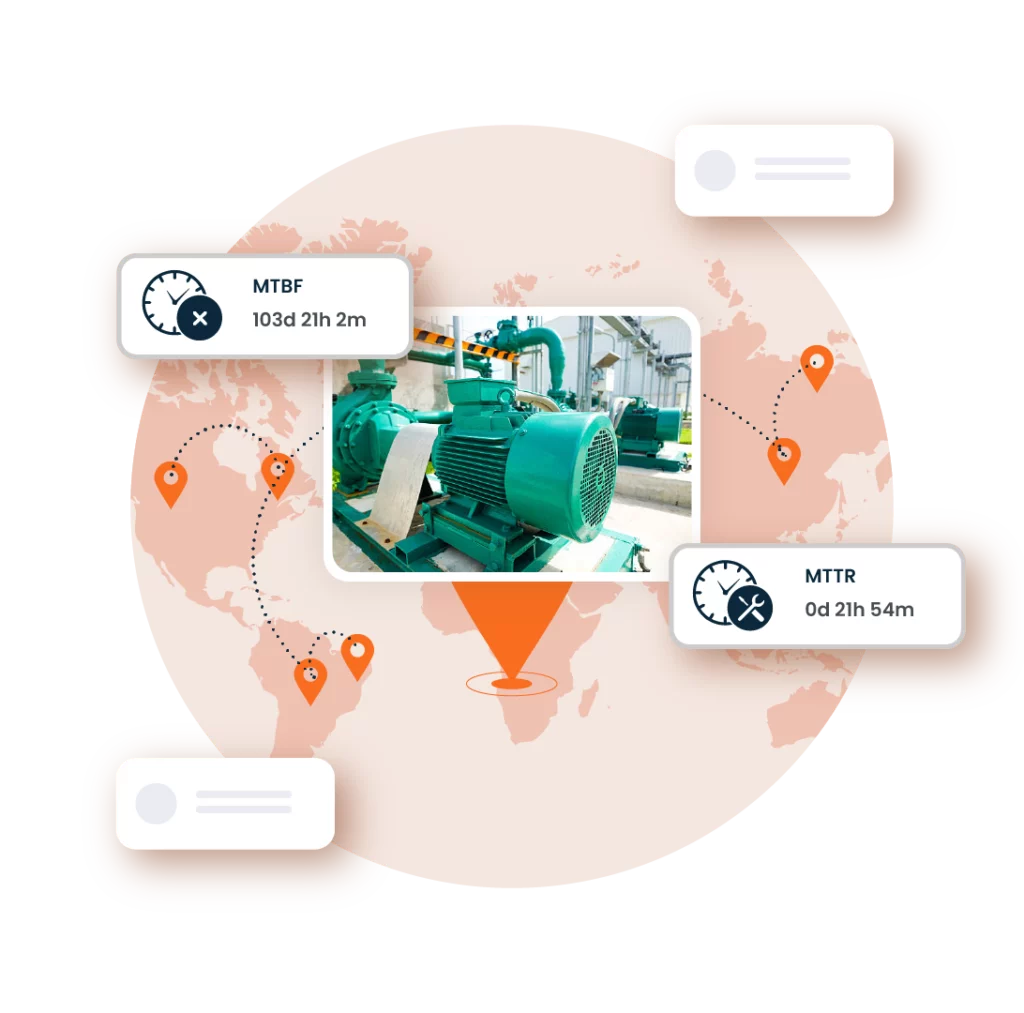
Fogwing EAM is a modern enterprise asset management software platform designed for heavy equipment manufacturers that require real-time asset visibility, predictive maintenance, IoT-based monitoring, and multi-site asset lifecycle management.
Manufacturers across India, the Middle East, Europe, Australia, and APAC use Fogwing EAM to reduce downtime, improve maintenance planning, and centralise asset operations.
Why Heavy Equipment Manufacturers Are Choosing Fogwing EAM
Heavy equipment manufacturers increasingly require more than basic maintenance tracking software. Modern operations need connected enterprise asset management systems that combine predictive maintenance, industrial IoT monitoring, mobile maintenance workflows, and real-time asset visibility within a single platform.
Fogwing EAM is designed for asset-intensive manufacturing environments where equipment reliability, maintenance visibility, and operational continuity are critical. The platform helps manufacturers reduce unplanned downtime, improve preventive maintenance planning, and centralise asset operations across multiple plants, production lines, and yards.
Designed for complex and asset-heavy manufacturing operations
Strong IoT and condition-monitoring capabilities
Real-time equipment health monitoring and maintenance visibility
Easy adoption for shop-floor maintenance teams
Supports asset lifecycle tracking and compliance documentation
Helps digitise maintenance inspections and audit processes
Improves technician productivity using mobile-first workflows
Enables multi-site asset management and operational visibility
Key Features
Asset lifecycle and hierarchy management
Preventive, predictive, and condition-based maintenance
IoT-based equipment monitoring
AI-driven maintenance insights
Mobile-first technician workflows
Maintenance scheduling and work order management
Multi-site asset visibility and reporting
Best For
Small to mid-sized heavy equipment manufacturers looking for modern enterprise asset management software with strong IoT integration, predictive maintenance capabilities, and easier deployment without traditional enterprise complexity.
2. IBM Maximo
IBM Maximo is one of the most established names in enterprise asset management, widely used in large-scale industrial environments.
Why It Works Well
- Extremely robust asset lifecycle and reliability management
- Strong analytics and predictive maintenance capabilities
- Ideal for highly complex operations
Key Features
- Advanced asset performance management
- Predictive maintenance
- Compliance and audit tracking
- Multi-site asset control
Best For
Large heavy equipment manufacturers with complex global operations.
3. Tenna
Tenna focuses heavily on equipment tracking and visibility, making it popular among manufacturers managing large fleets and yards.
Why Teams Like It
- Strong asset location and usage tracking
- Good visibility for mobile and outdoor equipment
- Simple interface for tracking equipment movement
Key Features
- Equipment tracking and utilisation
- Maintenance scheduling
- Fleet management tools
- Reporting dashboards
Best For
Manufacturers with heavy focus on equipment fleets and yard operations.
4. SAP S/4HANA Asset Management
SAP S/4HANA Asset Management offers deep integration with enterprise ERP processes.
Why It’s Chosen
- Tight integration with finance, procurement, and production
- Strong governance and reporting
- Enterprise-wide asset control
Key Features
- Asset accounting and lifecycle management
- Integrated procurement workflows
- Compliance reporting
Best For
Large enterprises are already running SAP ecosystems.
5. HxGN EAM
HxGN EAM (Hexagon) is known for reliability engineering and asset performance management.
Why It Stands Out
- Strong reliability-centred maintenance
- Advanced analytics for asset performance
- Suitable for safety-critical assets
Key Features
- Asset performance analytics
- Condition-based maintenance
- Compliance and risk management
- Multi-site visibility
Best For
Heavy equipment manufacturers focused on reliability and risk reduction.
The Future of Asset Management in Heavy Equipment Manufacturing
The future of asset management in heavy equipment manufacturing is connected, data-driven, and predictive. As assets become more complex and downtime costs rise, manufacturers are moving beyond reactive maintenance.
Modern plants are adopting predictive maintenance using IoT sensors that monitor:
Vibration, temperature, and load
Equipment stress and component wear
This real-time data helps teams detect issues early, often weeks before failures occur, reducing unplanned downtime and extending asset life.
At the same time, AI-powered asset management software is simplifying maintenance decisions by:
Analysing real-time and historical asset data
Prioritising maintenance tasks automatically
Recommending timely actions based on asset criticality
Audits are also becoming easier. With digital asset records, every service, inspection, and replacement is automatically documented making compliance faster and less disruptive.
In this environment, asset management software for heavy equipment manufacturing becomes the core system that connects machines, maintenance teams, and decisions for reliable, cost-controlled operations.
Final Thoughts
Heavy equipment manufacturing depends on assets that are too valuable and too critical to be managed reactively.
The right asset management software for heavy equipment manufacturing brings clarity, control, and predictability to operations. It reduces downtime, extends asset life, simplifies audits, and supports better decision-making at every level.
As heavy equipment manufacturers modernise operations, enterprise asset management software is becoming a foundational part of Industry 4.0 transformation strategies. Platforms that combine predictive maintenance, industrial IoT monitoring, mobile maintenance workflows, and AI-driven analytics are helping manufacturers improve operational reliability while controlling long-term maintenance costs.
For manufacturers across India, Europe, the Middle East, and APAC, investing in structured asset management is no longer about digital transformation , it’s about staying competitive.
FAQs
1. What is asset management software for heavy equipment manufacturing?
It’s a digital system that helps manufacturers track, maintain, and optimise heavy machinery across its full lifecycle.
2. Which is the best asset management software for heavy equipment manufacturing?
Leading options include Fogwing EAM, IBM Maximo, Tenna, SAP S/4HANA Asset Management, and HxGN EAM, depending on plant size and complexity.
3. Is asset management software useful for mid-sized manufacturers?
Yes. Modern platforms like Fogwing EAM are designed to scale without enterprise overhead.