
Best Asset Management Software for Energy Management | 2026 Buyer’s Guide
How to Choose the Best Asset Management Software for Energy Management
India’s Top EAM & Asset Management Solutions for Manufacturing Operations in 2026
Table of Contents
Choosing the Right Platform for Power, Utilities, and Renewable Energy Operations . Energy operations in 2026 aren’t just about producing power anymore. They’re about keeping complex, distributed assets running reliably, meeting strict compliance requirements, and doing all of this while costs continue to rise.
Whether you’re managing a thermal power plant, a solar park, a wind farm, or a utility network, the reality on the ground looks familiar:
– Assets are spread across locations.
– Equipment is ageing.
– Downtime is expensive and highly visible.
That’s exactly why asset management software for energy management has become a core system not a “nice to have”.
This 2026 buyer’s guide walks you through what the best asset management software for energy management actually does, what to look for before shortlisting vendors, and how to choose the right platform for your energy operations.
Why Energy Teams Are Rethinking Asset Management in 2026
In energy and utilities, assets aren’t just expensive, they’re mission-critical. A single transformer failure, turbine breakdown, or substation issue can trigger outages, safety risks, and regulatory scrutiny.
Energy organisations today are dealing with:
- Large, geographically distributed asset bases
- A mix of old infrastructure and new renewable assets
- Pressure to reduce downtime and maintenance costs
- Increasing compliance, safety, and audit requirements
- Limited visibility into real asset health
Traditional maintenance approaches struggle to keep up with this complexity. In modern energy environments, maintenance teams increasingly rely on connected asset management platforms that integrate maintenance records, operational data, condition monitoring, and inspection history into a unified operational view.
This is especially important for utilities and renewable energy operators managing geographically distributed infrastructure where downtime directly impacts service reliability and energy output.
What Asset Management Software for Energy Management Really Means
In large-scale utilities and power generation environments, enterprise asset management software plays a central role in improving maintenance planning, operational visibility, asset reliability, and long-term infrastructure management across distributed energy operations.
That includes assets such as:
- Power generation equipment like turbines, boilers, and generators
- Renewable energy assets including wind turbines, solar inverters, and batteries
- Transmission and distribution equipment such as transformers and switchgear
- Utility infrastructure and critical support systems
Instead of scattered records, everything lives in one place: asset details, maintenance history, inspections, work orders, and performance data.
In simple terms, Energy teams know what assets they have, where they are, how they’re performing, and what needs attention next.
How Asset Management Software Supports Day-to-Day Energy Operations
On the ground, asset management software becomes the system energy maintenance teams rely on every day.
It typically helps with:
- Planning preventive maintenance before failures occur
- Assigning and tracking work orders for technicians
- Recording inspections and compliance checks digitally
- Monitoring downtime, failures, and repair costs
- Analysing asset performance over time
For utilities and renewable operators managing hundreds or thousands of assets, this level of visibility makes a real difference.
Common Scenarios Where Energy Teams See Immediate Value
Energy organisations usually start seeing ROI in very practical situations, such as:
- Reducing unplanned outages in power plants
- Improving availability of wind and solar assets
- Managing maintenance across substations and grids
- Tracking asset health across multiple sites and regions
- Supporting audits with accurate maintenance records
These use cases are especially important in energy environments where reliability and compliance are non-negotiable.
Before Comparing Vendors: What Really Matters in Energy Asset Management
Before looking at brands or platforms, it’s worth stepping back and asking a few operational questions.
The best asset management software for energy management should help you:
- Shift from reactive to preventive (and predictive) maintenance
- Support large, distributed asset networks
- Handle long asset lifecycles and high-value equipment
- Provide insights into asset health, not just asset lists
- Scale as operations expand across regions
If a platform only helps you “track” assets, it’s probably not enough for modern energy operations.
A Quick Snapshot: Leading Asset Management Software for Energy Management (2026)
Once energy teams get clear on their needs, a few well-known platforms usually come into the conversation. Each serves a slightly different type of energy organisation.
Here’s a high-level snapshot before we go deeper:
- Fogwing EAM – Enterprise-grade asset management software focused on maintenance, lifecycle management, and multi-site visibility for energy and utility operations.
- IBM Maximo – A long-established enterprise asset management platform widely used by utilities and large energy enterprises.
- AVEVA – Industrial and asset performance software commonly used in complex energy and process environments.
- Radian Generation – A platform focused on managing renewable energy assets like wind, solar, and storage portfolios.
A Closer Look at Leading Asset Management Software for Energy Management
1. Fogwing EAM
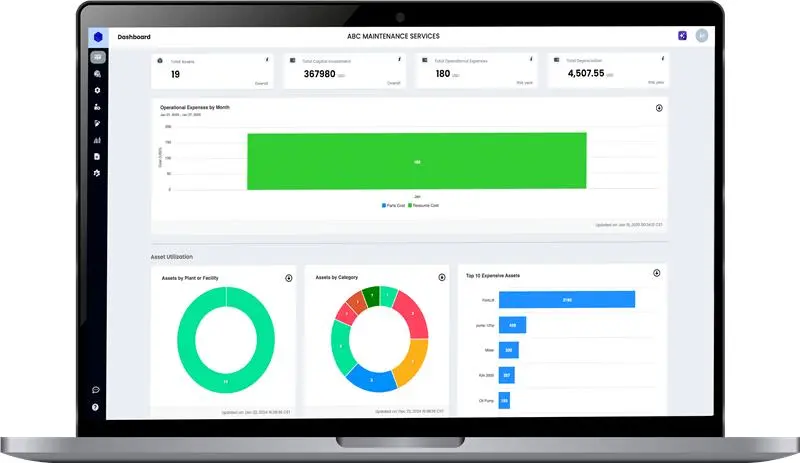
Fogwing EAM is an enterprise asset management (EAM) platform designed for asset-intensive industries, including energy, utilities, and renewables.
Many modern enterprise asset management software platforms now include IoT-enabled asset monitoring and maintenance analytics capabilities. In energy operations, these features help teams identify early warning signs, monitor equipment health trends, and reduce unexpected failures across turbines, transformers, generators, and renewable energy infrastructure.
Platforms such as Fogwing EAM increasingly combine these capabilities within a connected maintenance and operations environment.
Best for:
Fogwing EAM is used across manufacturing, utilities, infrastructure, and industrial operations in regions including India, the Middle East, Southeast Asia, Europe, and North America where organisations require scalable asset maintenance and operational visibility across multiple facilities and remote sites.
Key capabilities
- Asset lifecycle management
- Preventive and predictive maintenance
- Work orders and inspections
- Asset performance and downtime analytics
- Multi-site and multi-region deployment
Pros
- Strong maintenance and reliability focus
- Scales across large energy portfolios
- Clear visibility into asset performance
Cons
- Requires structured asset data setup initially
2. IBM Maximo
IBM Maximo is one of the most established enterprise asset management systems in the world and is widely used by utilities, power generation companies, and large energy enterprises.
Best for:
Large utilities and energy organisations with complex asset environments and long-term EAM strategies.
Pros
- Extremely robust asset lifecycle management
- Strong compliance and reliability features
- Mature ecosystem and integrations
Cons
- High implementation and ownership cost
- Requires significant configuration and expertise
3. AVEVA
AVEVA provides industrial software solutions focused on asset performance, operational data, and industrial analytics, commonly used in energy and process industries.
Best for:
Energy organisations are already using AVEVA or industrial data platforms.
Pros
- Strong asset performance management
- Deep industrial and operational integration
- Suitable for complex energy systems
Cons
- May require integration with EAM tools for full maintenance workflows
4. Radian Generation
Radian Generation focuses on renewable energy asset and operations management, especially for wind, solar, and storage portfolios.
Best for:
Renewable energy operators managing large fleets of generation assets.
Pros
- Renewable-focused asset insights
- Portfolio-level performance visibility
- Designed for distributed energy assets
Cons
- Limited applicability beyond renewables
- Not a full enterprise EAM for utilities
How to Choose the Best Asset Management Software for Energy Management
By this stage, most energy teams already know they need a better system. The real question is: which one actually fits their operations?
There’s no one-size-fits-all answer. A renewable energy operator has very different needs compared to a utility managing ageing grid infrastructure.
Before shortlisting platforms, think about:
- How distributed your assets are across sites or regions
- Whether downtime or maintenance planning is your biggest challenge
- How critical compliance and audits are to your operations
- Whether you need deep lifecycle insights or basic operational visibility
The best asset management software for energy management is the one your teams will actually use without adding complexity to their daily work.
From Managing Assets to Optimising Energy Performance
Energy companies today want more than asset tracking. They want real insight into performance and reliability.
Modern platforms help teams:
- Identify failure risks early
- Reduce unplanned outages
- Control long-term maintenance costs
- Decide when to repair vs replace assets
Instead of reacting to problems, teams can plan proactively. That shift from basic asset management to asset optimisation is where real operational value shows up
By combining maintenance history, inspection records, operational data, and asset performance insights, modern EAM platforms help energy teams make faster and more informed maintenance and infrastructure decisions.
Final Thoughts
Energy operations depend on reliable assets, smart maintenance, and clear visibility across sites.
The best asset management software for energy management helps teams move from reactive firefighting to proactive, data-driven decision-making—whether managing utilities, power plants, or renewable assets.
As energy operations become increasingly digital and data-driven, modern enterprise asset management software helps utilities, power producers, and renewable energy operators improve asset reliability, maintenance efficiency, operational visibility, and long-term infrastructure performance across distributed energy environments.
FAQs
1. What is the best asset management software for energy management?
It depends on asset scale and type. Fogwing EAM and IBM Maximo suit large utilities and power producers, AVEVA works well for performance-driven industrial energy environments, and Radian Generation is ideal for renewable energy portfolios like wind and solar.
2. Is asset management software useful for renewable energy assets?
Yes. Modern platforms support lifecycle management and performance monitoring for wind, solar, and storage assets.
3. Can asset management software support multi-site energy operations
Absolutely. Cloud-based systems are designed for distributed energy assets across regions.