
Best Asset Management Software for Cement Plants
Top Asset Management Software for Cement Plants
Choosing the Right Asset Management Software for Cement Plants
Table of Contents
Cement manufacturing is one of the most asset-intensive industrial environments in the world. Rotary kilns operate at extreme temperatures. Mills run under constant vibration. Conveyors and crushers handle continuous heavy loads.
Even one hour of unplanned kiln downtime can cost thousands in lost production.
Asset management software for cement plants is a digital system designed to monitor, maintain, and optimise heavy industrial equipment such as kilns, crushers, mills, conveyors, and filtration systems. It centralises maintenance workflows, enables predictive insights, and improves asset reliability across the plant lifecycle.
In 2026, choosing the right platform is no longer about work order tracking; it’s about predictive control, lifecycle visibility, and multi-plant coordination.
This guide evaluates leading solutions used in cement manufacturing and outlines how to choose the right one.
Why Cement Plants Need Advanced Asset Management Systems
Cement manufacturing is highly asset-intensive and operates in extreme industrial conditions. Equipment failure can immediately disrupt production and increase operational costs.
A typical cement plant relies on critical assets such as:
- Rotary kilns
- Ball mills and vertical roller mills
- Crushers and stacker reclaimers
- Conveyor belts and bucket elevators
- Clinker coolers
- Dust collectors and filtration systems
- Heavy-duty motors, bearings, and gearboxes
These assets function under demanding conditions:
- High operating temperatures
- Continuous vibration and load stress
- Dust-heavy processing environments
- 24/7 production cycles
Without a structured maintenance system, plants commonly face:
- Bearing and gearbox failures
- Kiln alignment issues
- Refractory wear mismanagement
- Spare parts shortages
- Safety and compliance risks
Manual logs and spreadsheets cannot manage this level of complexity at scale.
Modern enterprise asset management (EAM) software for cement plants enables:
- Preventive and predictive maintenance scheduling
- Real-time equipment health monitoring
- Integrated spare parts and inventory control
- Mobile technician work order management
- Multi-site visibility and reporting dashboards
By centralising asset data and automating maintenance workflows, cement plants reduce unplanned downtime, extend equipment lifespan, and improve production reliability.
Top Asset Management Software for Cement Plants (2026)
The following platforms are commonly evaluated by cement manufacturers:
- Fogwing EAM – AI-driven predictive and multi-site asset visibility
- ABB Ability™ AssetVista & Predictive Maintenance – Automation-integrated diagnostics
- IBM Maximo – Enterprise lifecycle asset management
- SAP EAM / SAP Business One – ERP-integrated maintenance control
- Ramco ERP – Asset management embedded within ERP framework
A Closer Look at the Best Asset Management Software for Cement Plants
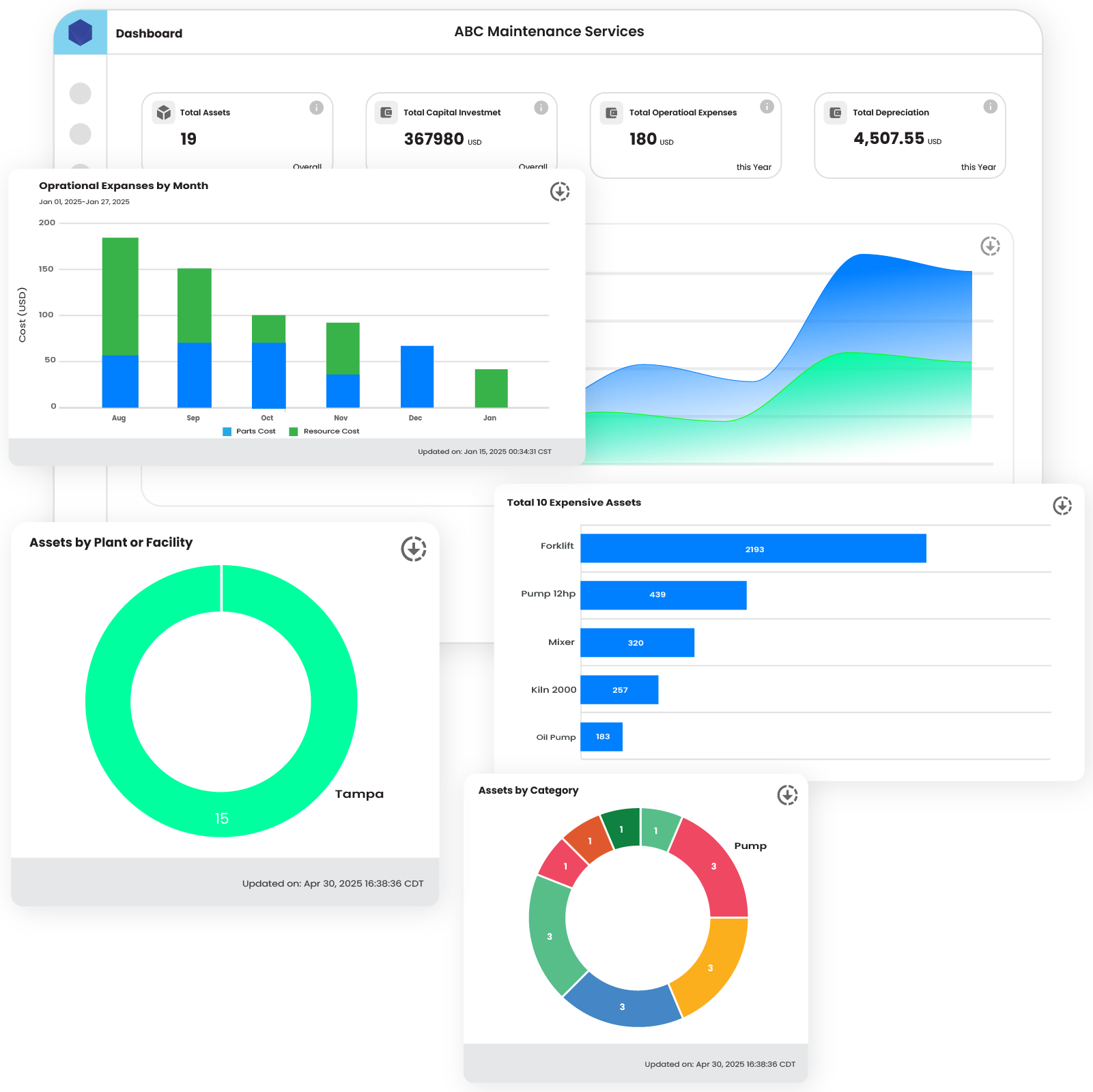
1. Fogwing EAM
Strengths
- AI-driven predictive maintenance for rotating equipment
- IoT sensor integration (vibration, temperature, condition monitoring)
- Preventive maintenance automation
- Spare parts and inventory optimisation
- Mobile-first work order execution
- Multi-plant centralised dashboards
Best Fit
Mid-to-large cement manufacturers seeking cloud-based EAM with predictive capabilities and cross-site visibility.
2. ABB Ability AssetVista & Predictive Maintenance
ABB’s solution integrates closely with its automation and control systems.
Strengths
- Advanced condition monitoring for motors and drives
- Integration with ABB control infrastructure
- Equipment health dashboards
Best Fit
Cement plants heavily invested in ABB automation ecosystems.
3. IBM Maximo
IBM Maximo is widely used across heavy industries.
Strengths
- Advanced asset lifecycle management
- Complex workflow configuration
- Predictive analytics modules
- Enterprise compliance tracking
Best Fit
Large cement groups with strong IT teams and complex infrastructure.
4.SAP EAM / SAP Business One
SAP integrates maintenance management into broader ERP operations.
Strengths
- Financial-maintenance integration
- Procurement and inventory linkage
- ERP-aligned maintenance workflows
Best Fit
Organisations prioritising ERP integration and financial transparency.
5. Ramco ERP
Ramco provides maintenance modules within its ERP suite.
Strengths
- Asset tracking
- Preventive maintenance
- HR and finance integration
- Cloud deployment
Best Fit
Mid-sized cement operations seeking ERP-centric maintenance management.
A quick comparison of Top Asset Management Software for Cement Plants
| Platform | Predictive Maintenance | IoT Integration | ERP Integration | Scalability | Implementation Complexity |
|---|---|---|---|---|---|
|
Fogwing EAM |
Advanced AI-based |
Strong |
Moderate |
High |
Moderate |
|
ABB Ability |
Strong |
Advanced |
Limited |
High |
Moderate |
|
IBM Maximo |
Advanced |
Advanced |
Moderate |
Very High |
High |
|
SAP EAM |
Moderate |
Moderate |
Very Strong |
High |
High |
|
Ramco ERP |
Moderate |
Moderate |
Strong |
High |
Moderate |
How to Choose the Right Platform for a Cement Plant
When evaluating EAM solutions, focus on operational alignment.
Predictive Maintenance Capability
Kilns, crushers, mills, and gearboxes require condition-based monitoring. Look for AI-supported failure detection.
Integration Readiness
Ensure compatibility with:
- PLC systems
- SCADA platforms
- Existing IoT sensors
- ERP systems
Spare Parts Strategy
Cement plants maintain critical spares for high-value rotating equipment. Integrated inventory control reduces downtime risk.
Multi-Site Visibility
If operating multiple plants, choose software that supports centralised reporting.
Environmental & Compliance Monitoring
Dust emissions, filtration systems, and safety audits require structured logging.
The Future of Asset Management in Cement Manufacturing
Cement plants are moving toward:
- Real-time equipment health monitoring
- AI-based failure forecasting
- Cloud-based multi-plant dashboards
- Digital inspection workflows
- Integrated quarry-to-clinker asset visibility
Plants that rely purely on reactive maintenance face rising downtime costs and reduced operational efficiency.
Final Thoughts
Cement manufacturing is one of the most demanding industrial environments. From rotary kilns and clinker coolers to crushers and conveyors, every asset operates under extreme temperature, load, and dust exposure. In such conditions, reactive maintenance is no longer sustainable.
The right Asset Management Software for Cement Plants should go beyond work order tracking. It must support predictive maintenance, integrate with IoT sensors, centralise spare parts control, and provide multi-plant visibility.
Whether your priority is ERP integration, automation-led diagnostics, or AI-driven predictive insights, selecting a platform aligned with your operational complexity is critical. The goal is simple: reduce unplanned downtime, extend asset life, and maintain consistent production output.
Plants that invest in structured, data-driven asset management today will lead in operational efficiency, compliance, and long-term profitability.

FAQs
1. What is Asset Management Software for Cement Plants?
Asset Management Software for Cement Plants is a digital maintenance system designed to monitor, maintain, and optimise heavy industrial equipment such as kilns, mills, crushers, conveyors, and filtration systems. It centralises work orders, preventive maintenance schedules, spare parts inventory, and equipment health data.
2. What is the best asset management software for cement plants?
The best Asset Management Software for Cement Plants depends on operational needs:
Fogwing EAM – Strong in AI-driven predictive maintenance and multi-site visibility
ABB Ability™ – Ideal for plants using ABB automation systems
IBM Maximo – Enterprise-grade lifecycle asset management
SAP EAM – Best for ERP-integrated maintenance operations
Ramco ERP – Suitable for mid-sized, ERP-centric cement plants
3. Why do cement plants need predictive maintenance software?
Cement plant equipment operates under continuous stress. Predictive maintenance software uses sensor data (vibration, temperature, load monitoring) to detect early failure patterns in rotating equipment such as kilns, gearboxes, and mills, preventing costly unplanned shutdowns.
4. How does asset management software reduce downtime in cement plants?
It reduces downtime by:
Automating preventive maintenance scheduling
Monitoring real-time equipment health
Managing critical spare parts inventory
Providing mobile work order execution
Centralising performance analytics across multiple plants
5. Is ERP-integrated asset management better for cement manufacturing?
ERP-integrated systems are beneficial for organisations prioritising financial tracking, procurement alignment, and inventory transparency. However, plants focused on predictive maintenance and operational intelligence may require more advanced EAM capabilities beyond standard ERP modules.